
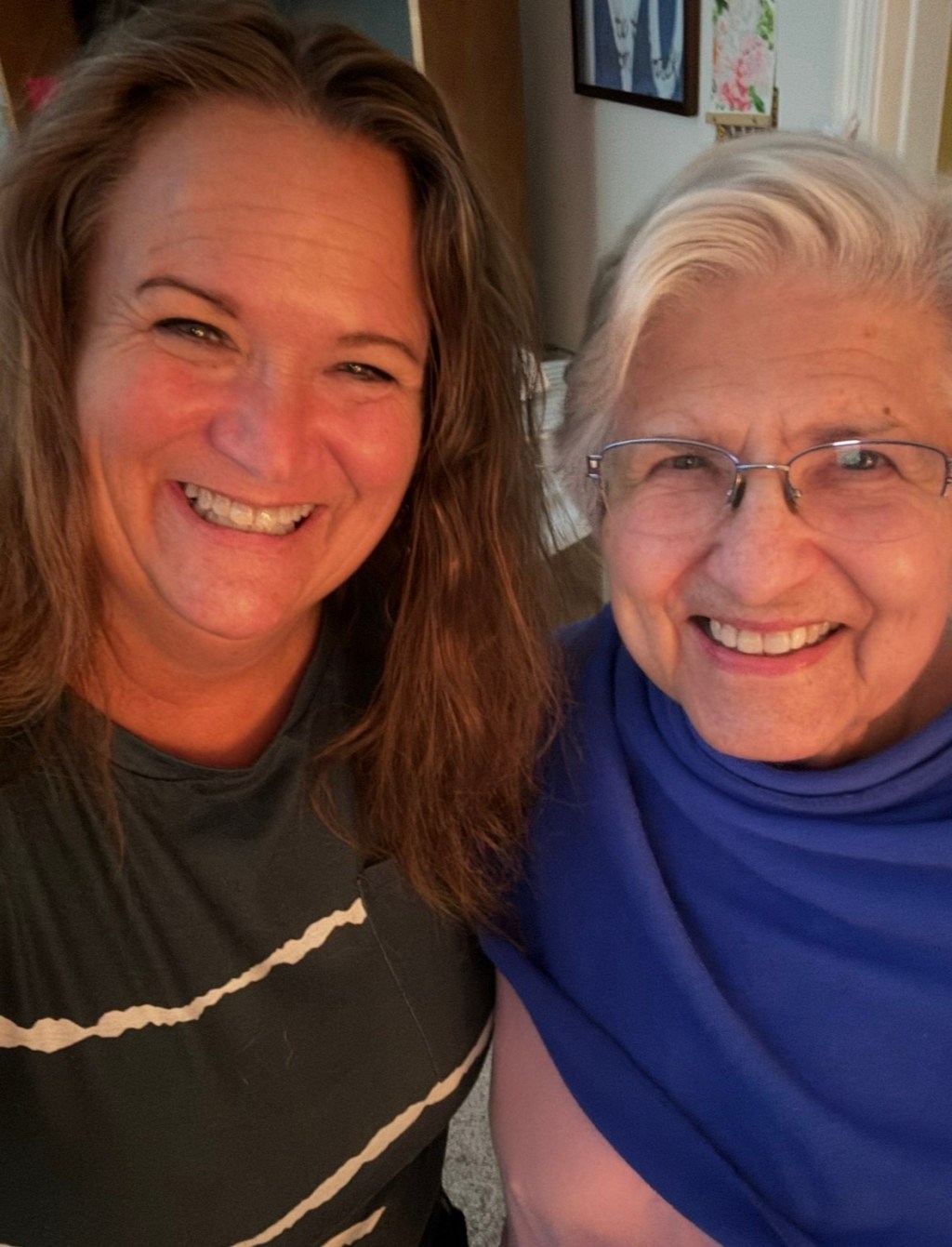
When Mom first had her stroke a couple of weeks ago, I started writing letters to her. It was a way to process the fear and grief that threatened to take me out.
For the last three years, writing has been the healthiest tool in my arsenal to manage my mental health. I began posting daily updates for friends and family, keeping them informed on Mom’s condition and sharing my heart. I didn’t realize for several days that my words—and God’s words through me—were helping others navigate their own grief.
I wasn’t really writing for others, though. I was writing for me. Long hours by Mom’s bedside—what else could I do? Trying to read was pointless. Working was impossible. Television? Not a chance. When my mom’s eyes opened, I needed to be right there.
Poor Mom. When she did wake up, she never got a chance to look around if I was in the room. I hogged every second of eye contact I could!
But I could write about what was happening. About my fears of losing her. About my confusion when her will to fight didn’t match her advance directive. About the funny expressions she made when I told her I was going to smuggle some Blue Bell in the hospice center. About the most serene expression I’d ever seen on her face the evening we finally brought her home to her own bedroom.
I wrote it all down. Some of it I shared. Others were stored privately in a folder on my phone. We didn’t know how much time we would have, but we knew what we were facing. I was both relieved and horrified at her living will. There was no decision to be made—she had already made it. I hated it, but I also knew what life would entail. She was already becoming a prisoner of her own mind as the dementia progressed. To become a prisoner of her body as well would have been excruciating for her.
It still didn’t make saying goodbye any easier.
For nine days Mom lay dying, and I realized I could not spend every moment grieving her while she was still alive. We had a gift of extra time—6 days!—after we removed the ventilator and she woke up! She couldn’t speak or swallow, but she was alert. In one final act of selfless motherhood, she taught us how to let her go.
My letters have not stopped.
I write when I have a happy memory. I write about childhood memories. I tell her how much I miss her. I write when I can’t get the tears to stop.
I don’t know how long I’ll keep writing letters. But I do know that grief doesn’t end when the mourners go home. It’s actually in the silence that it truly begins.


Leave a Reply